


Send Message
Privacy statement: Your privacy is very important to Us. Our company promises not to disclose your personal information to any external company with out your explicit permission.
 SICHUAN FOREVER RADIATION TECHNOLOGY CO.,LTD


Heat shrink sleeve Canusa technology represents a specialized pipeline protection system where polyolefin-based sleeves are cross-linked using radiation processing to create durable, moisture-resistant joints for steel pipelines. The Canusa brand has become synonymous with high-performance heat shrink sleeve solutions that protect critical infrastructure from corrosion and environmental damage.
These sleeves work by shrinking tightly around pipe joints when heated, creating a waterproof seal that protects against soil stress, moisture ingress, and chemical exposure. For procurement professionals sourcing pipeline materials, understanding the difference between standard heat shrinkable sleeves and radiation-crosslinked versions is essential for making informed decisions about long-term pipeline integrity and maintenance costs.
Pipeline engineers specify radiation-crosslinked heat shrink sleeve Canusa technology because it delivers superior mechanical properties compared to conventional chemical crosslinking methods, reducing your lifecycle maintenance costs while ensuring regulatory compliance across international pipeline standards.
Sichuan Forever Radiation Technology Co.,Ltd operates as the National Radiation Crosslinking Heat Shrinkable Material Technology Center, leveraging decades of nuclear technology expertise to produce premium heat shrink sleeve products. Our manufacturing facility inherited China's first Russian accelerator, enabling precise electron beam irradiation that creates uniform molecular cross-linking throughout every batch of heat shrink tubing.
The company's parent organization, Sichuan Forever Holding Group, manages 116 enterprises across new materials and engineering plastics sectors, providing unmatched supply chain stability for bulk heat shrink sleeve orders. This vertical integration ensures consistent raw material quality from polyethylene resin sourcing through final product inspection.
Procurement teams benefit from our integrated manufacturing model, which eliminates third-party quality variability while maintaining competitive pricing on large-volume heat shrink sleeve purchases for major pipeline projects.
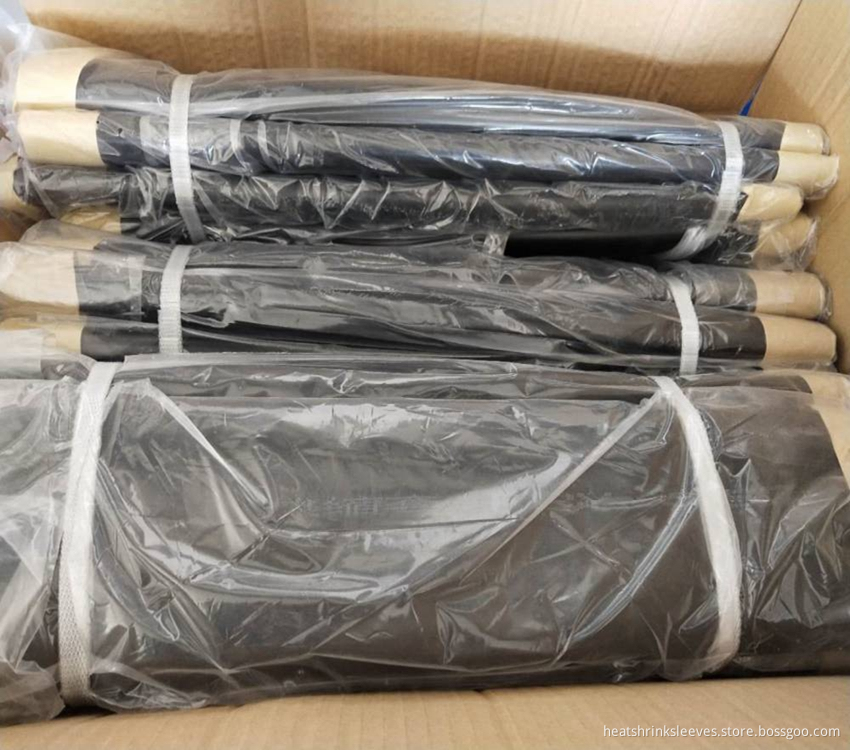
Selecting the appropriate heat shrink sleeve specification requires evaluating multiple technical parameters including operating temperature range, chemical resistance requirements, installation environment conditions, and compatibility with existing pipeline coating systems. Procurement specialists must match sleeve specifications to project-specific demands rather than defaulting to generic solutions.
Engineering teams reduce project risk by specifying radiation-crosslinked heat shrink sleeves with verified test data, avoiding the hidden costs associated with premature coating failures and emergency pipeline repairs.
Use this comprehensive checklist when evaluating heat shrink sleeve suppliers and products for your pipeline projects. Each item addresses common procurement pain points that can impact project timelines, budget adherence, and long-term pipeline performance.
Pipeline procurement professionals frequently encounter challenges related to heat shrink sleeve specification mismatches, supplier capability gaps, and installation quality issues. Understanding these common problems upfront helps you avoid costly mistakes during the sourcing process.
Many suppliers claim radiation crosslinking but fail to achieve the minimum 85% crosslinking degree required for reliable pipeline protection. Under-crosslinked sleeves exhibit poor chemical resistance and reduced service life.
Solution: Require documented test results from accredited laboratories showing crosslinking percentage, tensile strength retention, and elongation at break values meeting industry standards.
Mixing primers, adhesives, and sleeves from different manufacturers creates weak bond interfaces that fail under thermal cycling and soil stress conditions. This is the leading cause of premature joint failures.
Solution: Source complete coating systems from single-source manufacturers who control all component formulations and guarantee system compatibility with documented performance data.
Suppliers who only provide products without installation guidance leave contractors without critical application knowledge, leading to improper surface preparation, incorrect heating techniques, and substandard joint quality.
Solution: Select manufacturers offering comprehensive technical packages including installation manuals, video training, on-site supervision availability, and dedicated engineering support hotlines.
Reliance on distributors or trading companies instead of direct manufacturers creates visibility gaps regarding production schedules, inventory levels, and potential delivery delays that disrupt project timelines.
Solution: Establish direct relationships with manufacturers who operate their own irradiation facilities and maintain adequate safety stock of standard sizes to ensure on-time delivery commitment.
Radiation-crosslinked heat shrink sleeves serve critical protection functions across diverse industrial sectors where pipeline integrity directly impacts operational safety, environmental compliance, and revenue generation. Understanding application-specific requirements helps procurement teams select the right product configuration for each use case.
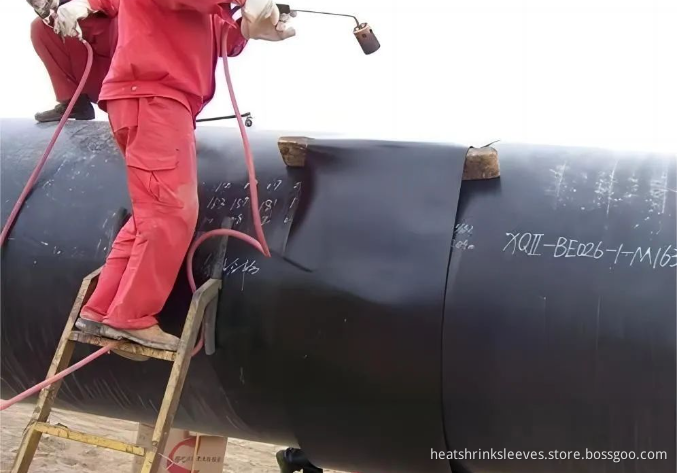
Heat shrink sleeves provide field joint coating for three-layer polyethylene pipeline systems, protecting weld areas from corrosion in transmission and distribution pipelines spanning hundreds of kilometers.
Specialized HDD pipeline shrinkable sleeves protect cables and conduits installed via directional drilling methods, offering flexibility and impact resistance during pull-back operations and long-term underground service.
Electron beam crosslinked sleeves insulate power cable splices and terminations, providing electrical isolation and moisture barrier protection for medium and high-voltage distribution networks.
Communication cable irradiation crosslinking materials seal fiber optic and copper cable joints against water ingress, ensuring signal integrity and preventing corrosion in underground and submarine installations.
Heat shrink wrap around sleeves protect water intake and discharge pipelines from aggressive chemical environments and biofouling, extending asset life in municipal and industrial water treatment facilities.
Repair patches and cold applied tape systems restore damaged offshore pipeline coatings, enabling rapid underwater repairs that minimize production downtime and environmental liability risks.
When selecting a heat shrink sleeve manufacturer, evaluate candidates against these critical criteria that distinguish reliable suppliers from commodity traders. These factors directly impact your project's total cost of ownership, not just initial purchase price.
Prioritize manufacturers who control the entire production chain from raw material compounding through irradiation processing to final packaging. Sichuan Forever Radiation Technology exemplifies this model, operating as both producer and irradiation service provider under one organizational structure.
Companies with nuclear technology backgrounds like CAEP's Ninth Scientific Research Institute bring decades of precision irradiation expertise to polymer processing. This heritage translates to superior product consistency and continuous innovation in formulation development.
Evaluate whether the supplier offers complete system solutions including primers, melt sticks, end caps, and installation tools. Single-source procurement simplifies logistics, reduces interface risks, and consolidates warranty responsibility.
Reputable suppliers welcome independent inspection services and provide comprehensive test documentation. Look for manufacturers who actively participate in industry standard development and maintain active relationships with certification bodies.
Answers to common questions from procurement professionals evaluating heat shrink sleeve suppliers and specifications for pipeline protection projects.
Radiation crosslinking uses electron beam irradiation to create uniform molecular bonds throughout the polymer structure, achieving crosslinking degrees above 85%. Chemical crosslinking relies on peroxide initiators that distribute unevenly, often resulting in inconsistent properties across the sleeve wall. Radiation-crosslinked sleeves demonstrate superior mechanical strength, chemical resistance, and long-term durability, making them the preferred specification for critical pipeline applications.
Request documentation showing the supplier operates or has direct access to electron beam accelerators capable of delivering the required dose levels. Ask for recent third-party test reports documenting crosslinking degree measurements taken at multiple locations across production batches. Suppliers with nuclear technology heritage typically possess the most sophisticated irradiation equipment and quality control procedures.
For steel pipeline applications, specify a complete system comprising epoxy primer, polyolefin-based pressure-sensitive adhesive, and radiation-crosslinked polyolefin sleeve. The primer provides surface activation and corrosion inhibition, while the adhesive creates the primary bond between the sleeve and existing pipeline coating. Always source all three components from the same manufacturer to guarantee chemical compatibility and warranty coverage.
Yes, repair patches and wrap-around sleeves are specifically designed for field repair of damaged three-layer PE or PP coatings. These products accommodate irregular surfaces and can be applied in confined spaces where full replacement coating is impractical. Proper surface preparation including abrasive cleaning and primer application is essential for achieving reliable repair bond strength.
Standard size heat shrink sleeves from integrated manufacturers with adequate safety stock typically ship within 2-4 weeks. Custom specifications requiring special dimensions, colors, or packaging may require 6-8 weeks production time. Orders exceeding standard inventory thresholds may need advance scheduling coordination. Direct manufacturer relationships provide the most accurate delivery commitments compared to distributor channels.
Most established manufacturers offer OEM customization including custom diameters, wall thicknesses, lengths, colors, and branded packaging. Minimum order quantities vary by specification complexity. Working directly with the production engineering team ensures your custom requirements are technically feasible and economically optimized before placing orders.
About Us
Related Products List
Contact Us

Privacy statement: Your privacy is very important to Us. Our company promises not to disclose your personal information to any external company with out your explicit permission.
Fill in more information so that we can get in touch with you faster
Privacy statement: Your privacy is very important to Us. Our company promises not to disclose your personal information to any external company with out your explicit permission.