


Send Message
Privacy statement: Your privacy is very important to Us. Our company promises not to disclose your personal information to any external company with out your explicit permission.
 SICHUAN FOREVER RADIATION TECHNOLOGY CO.,LTD


A mastic sealing strip is a specialized polymeric sealing solution designed to create watertight, airtight, and corrosion-resistant barriers around pipes, cables, and structural joints. Unlike rigid seals that rely solely on mechanical compression, mastic strips utilize a non-hardening, self-adhesive compound that remains pliable over time. This unique characteristic allows the seal to accommodate thermal expansion, vibration, and ground movement without cracking or losing integrity.
For industrial procurement, this translates to a reduced lifecycle maintenance cost. The mastic compound bonds chemically to a wide variety of substrates, including steel, PVC, concrete, and copper. This eliminates the need for complex mechanical clamping systems in many applications, simplifying installation and lowering labor costs. It is particularly critical in harsh environments where moisture ingress could compromise sensitive infrastructure or cause costly pipeline corrosion.
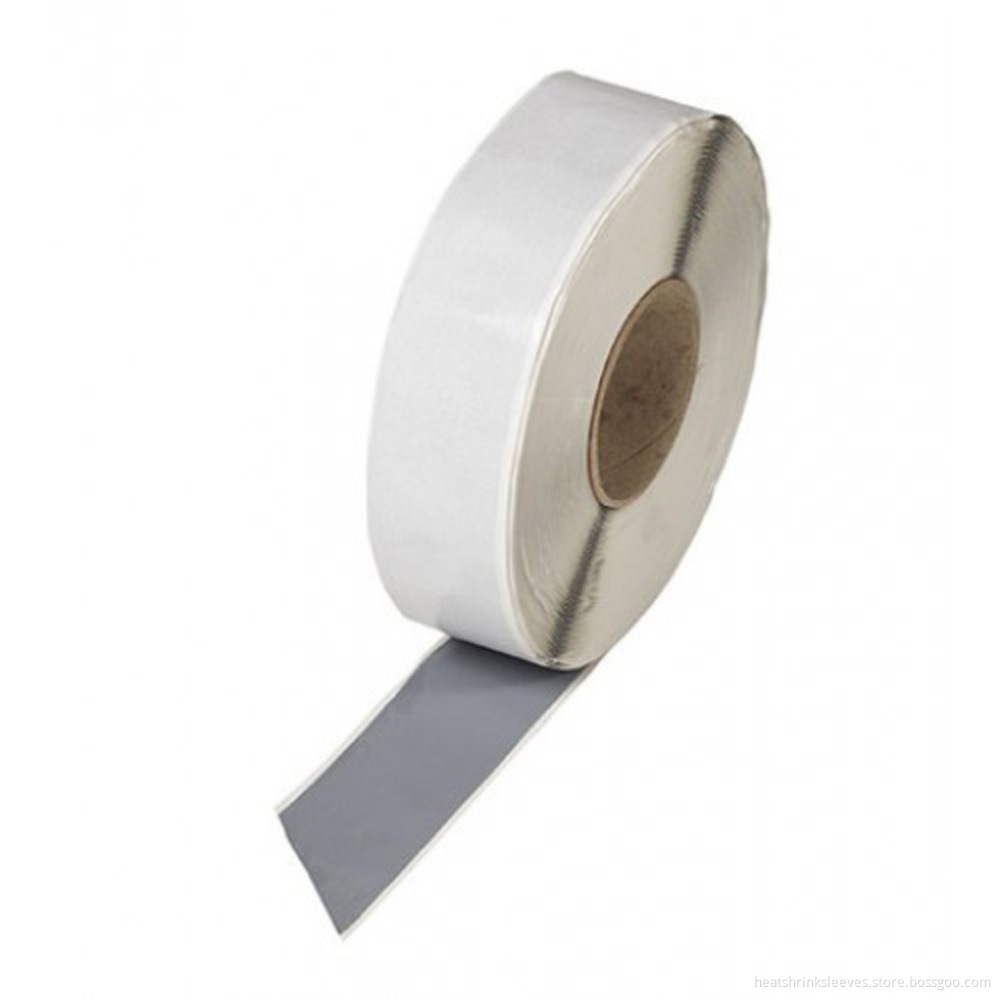
Our manufacturing process leverages advanced radiation crosslinking technology, ensuring consistent material properties across every batch. As a facility rooted in nuclear technology research, we apply rigorous quality control protocols to every industrial mastic sealing strip produced.
Utilizing electron beam irradiation to enhance polymer structure. This results in superior thermal stability and chemical resistance compared to standard peroxide-crosslinked materials.
Automated mixing and extrusion ensure uniform density and adhesive properties. Every roll meets strict specifications for thickness, width, and tensile strength.
Rigorous testing for water absorption, adhesion strength, and aging resistance ensures long-term performance in demanding environmental conditions.
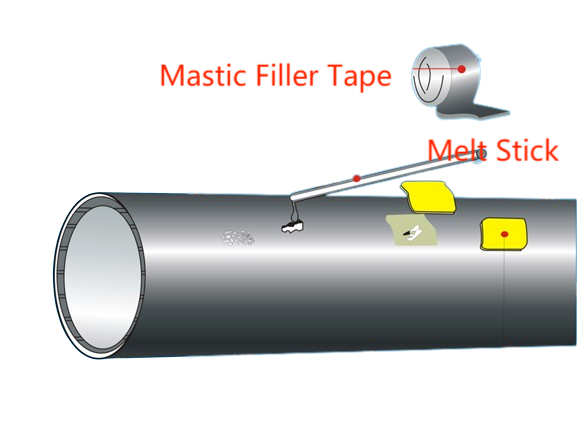
Selecting the correct mastic sealing strip requires matching material properties to your specific operational environment. Consider the following factors:
Use this checklist to evaluate potential suppliers and ensure you are getting the best value for your mastic sealing strip procurement.
Understanding common pitfalls helps avoid costly delays and failures. Here are frequent issues buyers face with mastic sealing strip suppliers.
Poor surface preparation before application often leads to delamination. Ensure suppliers provide clear surface prep guidelines and compatible primers.
Variations in strip thickness can result in uneven pressure distribution. Request samples for dimensional verification before bulk ordering.
Some low-quality mastics cure or harden over time, losing their sealing ability. Verify the product remains pliable throughout its specified service life.
Mastic sealing strips are versatile solutions used across multiple industries where reliable sealing is critical for safety and efficiency.
Sealing flanges, valves, and repair patches on transmission pipelines to prevent corrosion and moisture ingress.
Waterproofing cable splices and entry points in underground and aerial communication networks.
Sealing joints in water and wastewater treatment plants, resistant to chemicals and constant moisture exposure.
Providing waterproof seals around penetrations in concrete structures, foundations, and building envelopes.
As a pioneer in radiation crosslinking materials, we offer distinct advantages for global buyers seeking high-performance mastic sealing strips.
Backed by China Academy of Engineering Physics, our manufacturing leverages advanced nuclear technology for superior material properties.
From raw material development to final product inspection, we control every step of the supply chain for consistent quality.
Flexible manufacturing capabilities allow us to meet specific size, material, and packaging requirements for your projects.
Most high-quality mastic sealing strips have a shelf life of 12-24 months when stored in accordance with manufacturer recommendations (cool, dry, away from direct sunlight). Always check the expiration date on the packaging.
Yes, many mastic sealing strips are designed for submerged applications. They maintain their adhesion and pliability even under hydrostatic pressure, making them suitable for underwater pipeline repairs and cable sealing.
While tape wraps rely on mechanical overlap and adhesion, mastic strips contain a thick, non-hardening compound that fills irregularities and gaps more effectively. This makes mastics ideal for rough surfaces and dynamic joints where tapes might fail.
Yes, we provide OEM services and can manufacture mastic sealing strips in custom widths, lengths, and thicknesses to meet your specific project requirements. Contact our sales team for details.
Our products undergo rigorous testing and comply with relevant international standards. Specific certifications may vary by product type. Please request detailed documentation for your particular application needs.
About Us
Related Products List
Contact Us

Privacy statement: Your privacy is very important to Us. Our company promises not to disclose your personal information to any external company with out your explicit permission.
Fill in more information so that we can get in touch with you faster
Privacy statement: Your privacy is very important to Us. Our company promises not to disclose your personal information to any external company with out your explicit permission.